

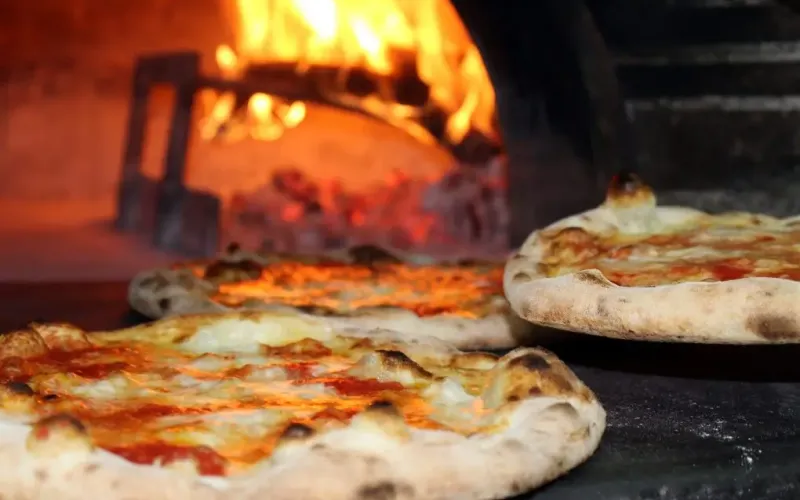
Correct Wood-Fired Oven Temperature for Neapolitan Pizza
Authentic Neapolitan pizza is one of the world’s most celebrated culinary delights, and one of the key elements for baking it perfectly is the temperature of the wood-fired oven.
If you’d like to taste a true Neapolitan pizza, don’t hesitate — come and visit the Neapolitan pizzeria in Milan, ’A Tarantella.
In the craft of making an authentic Neapolitan pizza, the oven temperature is crucial and must be kept under precise control to ensure even baking and a crust that’s crisp on the outside yet soft inside.
The Ideal Wood-Fired Oven Temperature
The optimal temperature for a wood-fired oven for Neapolitan pizza is usually between 430°C and 480°C (around 800–900°F).
This high heat allows for rapid baking, which is essential for achieving a crisp crust and a soft interior.
Preparing the Oven
Before baking pizzas, a wood-fired oven needs to be heated for several hours.
During this process, the wood burns down completely, transferring heat to the oven walls and bringing them to the desired temperature.
Temperature Monitoring
It’s essential to use a suitable thermometer for wood-fired ovens to monitor the internal temperature accurately.
This tool lets you adjust the fire as needed to maintain the desired heat level.
Baking the Pizza
Once the oven has reached the optimal temperature, it’s time to bake.
Neapolitan pizza cooks very quickly — typically in about 60–90 seconds — thanks to the oven’s high temperature.
Rotating the Pizza During Baking
While baking, it’s important to rotate the pizza periodically inside the oven to ensure even cooking.
This helps prevent excessive burning on one side and ensures the pizza bakes evenly all around.
Final Result
Once baked, Neapolitan pizza is taken out and served immediately to guarantee maximum freshness and flavour.
The thin, crisp crust combined with fresh ingredients makes Neapolitan pizza a truly outstanding food experience.
Conclusion
By keeping a steady temperature in the wood-fired oven and following the correct baking process, you can achieve an authentic, delicious Neapolitan pizza.
The right oven temperature is essential to ensure even cooking and a high-quality pizza that will be appreciated by all true pizza lovers.
Table: Recommended Wood-Fired Oven Temperatures and Neapolitan Pizza Baking Times
Below is a table showing typical wood-fired oven temperatures and the recommended baking times for Neapolitan pizza:
| Oven Temperature | Baking Time |
|---|---|
| 430–480°C (800–900°F) | 60–90 seconds |
This table reflects the typical temperatures and baking times for Neapolitan pizza baked in a wood-fired oven. The recommended temperature range is 430–480°C (800–900°F), and the pizza bakes quickly — usually in 60–90 seconds — thanks to the high heat. It’s important to adjust and monitor the temperature carefully to achieve a golden, crisp crust and a soft, tasty interior.
Table: Recommended Home Oven Temperatures and Neapolitan Pizza Baking Times
Below is a table showing typical home oven temperatures and suggested baking times for Neapolitan pizza:
| Oven Type | Oven Temperature | Baking Time |
|---|---|---|
| Electric oven | 250–300°C (480–570°F) | 8–12 minutes |
| Gas oven | 250–300°C (480–570°F) | 8–12 minutes |
These are approximate values and may vary depending on your specific oven and your pizza recipe. Always monitor the bake and adjust timing as needed to achieve a perfectly baked Neapolitan-style pizza.
Types of Wood-Fired Pizza Ovens
There are different types of wood-fired ovens for making pizza, each with unique characteristics in terms of size, shape, and baking method.
Choosing the right oven depends on your needs, the amount of production you want, and your personal preference for flavour and texture.
Here’s a closer look at the main types of wood-fired pizza ovens:
Dome Ovens
Dome ovens are among the most traditional and popular for baking pizza.
Their semi-spherical shape allows excellent heat circulation, ensuring even baking.
They’re made from refractory materials such as clay, fire bricks, or refractory concrete.
Tunnel Ovens
These ovens have an elongated, tunnel-like shape that lets you bake multiple pizzas at the same time.
They’re ideal for restaurants or high-output pizzerias, as they can handle large volumes quickly.
Fireplace-Style Ovens
Fireplace-style ovens have an elongated shape and a narrow front opening, similar to a fireplace.
This structure encourages steady airflow, which helps pizzas bake evenly.
Barrel Ovens
Barrel ovens are built with a metal or clay barrel that forms the baking chamber.
They’re more compact than dome ovens and can be easier to move or install outdoors.
Cone Ovens
These ovens have a cone shape that promotes even heat distribution.
They’re especially suitable for smaller pizzas and are often used for outdoor events or private parties.
Portable Ovens
Portable ovens are designed to be easy to transport and use outdoors.
They come in various sizes and can be fuelled by wood, charcoal, or gas.
Flat-Deck Ovens
Flat-deck ovens have a flat baking surface and are ideal for pizza alla pala or focaccia.
They can be heated with wood, gas, or electricity and offer fast, even baking.
Combination Ovens
Some ovens combine different cooking technologies, such as wood and gas, to maximise efficiency and versatility.
These ovens can also offer the flexibility to cook foods beyond pizza — such as meat, fish, or bread.