

The Different Expressions of Neapolitan Pizza
Exploring the Many Expressions of Neapolitan Pizza: From Margherita to Montanara
Neapolitan pizza is one of the highest expressions of Italian cuisine, and Naples is widely considered its undisputed homeland.
Over the centuries, this iconic dish has given rise to a variety of styles—each with its own distinct character—well worth discovering and enjoying.
Below, we explore several classic types of Neapolitan pizza, from the famous Margherita to the indulgent fried pizza.
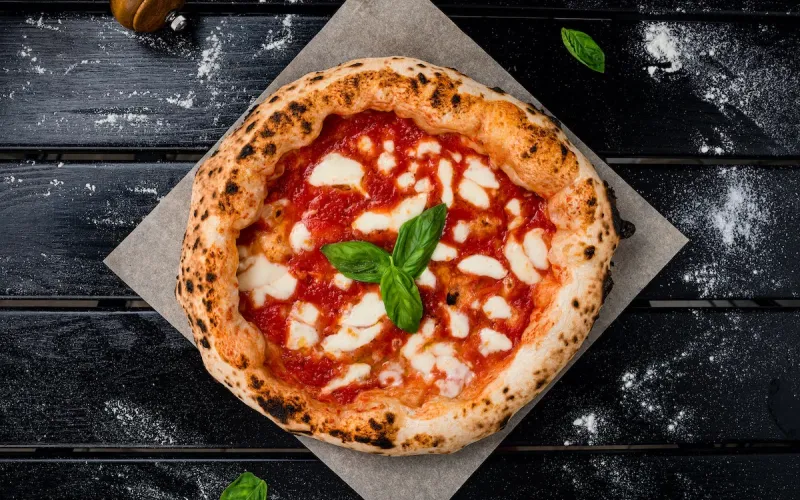
1. Margherita: A Tribute to a Queen
Margherita is the crown jewel of Neapolitan pizza. Created in 1889 in honor of Queen Margherita of Savoy, this simple yet extraordinary pizza captures the flavors of Italy with its base of fresh tomato, buffalo mozzarella, basil, and a drizzle of extra virgin olive oil.
Each ingredient is carefully chosen to create a perfect balance of taste and color—an authentic reflection of Italian culinary tradition.
2. Marinara: The Authentic Taste of Naples
Pizza Marinara is an ode to simplicity and authenticity. Made with fresh tomato, garlic, oregano, basil, and extra virgin olive oil, it delivers an explosion of Mediterranean flavor that evokes the home cooking traditions of Neapolitan families.
Marinara proves that even with just a few ingredients, you can create something truly unforgettable.
3. Montanara: A Crispy, Bold Twist
Montanara is a more daring take on classic Neapolitan pizza. In this version, the dough is lightly fried first, then topped and finished in the oven.
This technique creates a golden, crispy crust that pairs beautifully with tomato sauce, mozzarella, and basil. Montanara is the perfect meeting point between tradition and innovation—irresistible in every bite.
4. Fried Neapolitan Pizza: A Truly Indulgent Experience
Fried Neapolitan pizza is the ultimate comfort food. The dough is submerged in hot oil until perfectly golden, forming a crisp, addictive shell.
It’s then generously filled or topped with ingredients like tomato, mozzarella, cooked ham, salami, and basil. This rich and satisfying version of Neapolitan pizza is an experience everyone should try at least once in their life.
Neapolitan pizza is much more than a dish: it’s a culinary experience shaped by centuries of tradition and passion.
Its many variations—from Margherita to Montanara to fried pizza—offer a journey through the flavors and heritage of Naples, inviting food lovers around the world to discover its extraordinary gastronomic universe.
How Were the Different Expressions of Neapolitan Pizza Born?
The different expressions of Neapolitan pizza have deep roots in the history and culture of Naples.
Each variation reflects historical, social, and culinary influences that have shaped the city’s gastronomic tradition over time.
Historical Origins of Neapolitan Pizza
Margherita and Marinara:
The oldest forms of Neapolitan pizza are Margherita and Marinara. Margherita was created in 1889 to honor Queen Margherita of Savoy during her visit to Naples. Marinara, on the other hand, dates back to the times of sailors returning from their voyages, relying on simple ingredients such as garlic, tomato, and olive oil.
Montanara and Fried Pizza:
Montanara and fried pizza represent later evolutions of Neapolitan pizza. Montanara—where the dough is lightly fried before baking—may have emerged as a response during difficult economic periods, when making a meal more filling with fewer ingredients became essential. Fried pizza, meanwhile, has popular roots and is often considered beloved street food thanks to its bold flavor and easy portability.
Cultural and Social Influences
Neapolitan pizza styles are also the result of the cultural and social forces that have shaped Naples over centuries.
As a historic crossroads of peoples and traditions, Naples has always reflected diversity—and its cuisine is proof of that.
Local Ingredients:
Traditional Neapolitan pizzas rely on local, seasonal ingredients such as San Marzano tomatoes, buffalo mozzarella, extra virgin olive oil, and fresh basil. These ingredients bring authenticity and pay tribute to the richness of Campania’s land.
Culinary Innovation:
Some variations—like Montanara and fried pizza—are perfect examples of culinary creativity and adaptation. They can be seen as ingenious responses to social and economic challenges, as well as expressions of Naples’ lively food culture.
In short, the many expressions of Neapolitan pizza are the result of a rich history of tradition, cultural influences, and culinary innovation.
Each style tells its own story and offers an unforgettable experience—celebrating love for food, craftsmanship, and the creativity of this extraordinary region.