

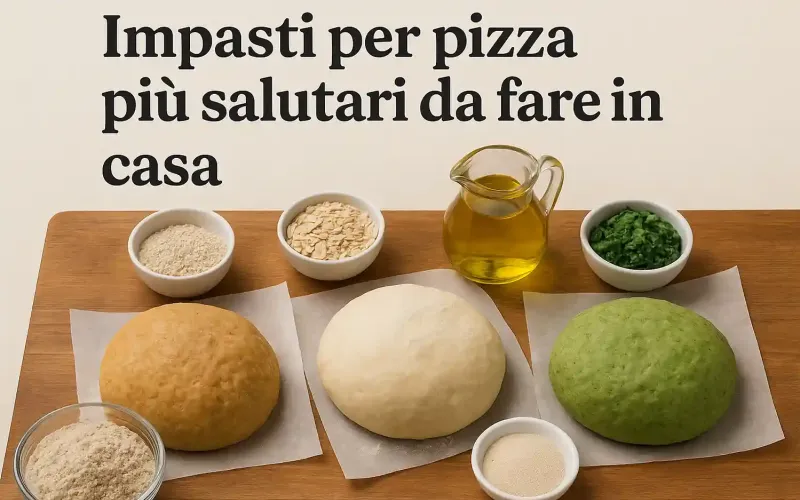
Healthier Pizza Doughs to Make at Home
Making pizza at home is one of the simplest and most rewarding things we can do for ourselves.
And you don’t need to be a pizzaiolo to create a dough that’s lighter, easier to digest, and more nutritious: you just need a few solid rules, quality ingredients, and respect for timing.
In this guide you’ll find everything you need to build healthier pizza doughs without sacrificing flavour. We’ll cover flours (wholegrain, semi-wholegrain, ancient grains, gluten-free alternatives), hydration, cold maturation, yeasts, and practical home techniques.
You’ll also find recipes with numbered steps, plus practical tips and common mistakes to avoid. By the end, you’ll be able to design a “made-to-measure” pizza dough that’s lighter and incredibly fragrant.
Remember: dough quality doesn’t come from one single choice — it comes from the balance of all choices.
-
Holistic approach: flour, water, yeast, salt, time, and baking must work together.
-
“Healthy” goal: more fibre, a better nutritional profile, higher digestibility.
-
Repeatable method: clear recipes and procedures you can adapt to your home oven.
Why change your dough: real benefits (not just trends)
Talking about “healthier doughs” isn’t about following a fad — it’s about improving your experience at the table. A dough that’s balanced in fibre and minerals, properly hydrated, and matured the right way tends to be easier to digest, more satisfying, and can help moderate the meal’s glycaemic impact.
You can feel the difference: lighter after-meal sensation, deeper aromas, more enjoyable chew, and a crisp crust that doesn’t become tiring. Using less refined flours also brings back a fuller, recognisable wheat flavour.
And health isn’t a detail: a well-made dough is an investment in wellbeing.
-
More fibre → better satiety and support for the gut microbiome.
-
More minerals & vitamins preserved in less refined flours.
-
Higher hydration → softer crumb, thinner crust, a more pleasant bite.
-
Slow maturation → more digestible, more flavourful doughs.
Start here:
-
Choose a quality flour (Type 1/Type 2, wholegrain, or a smart blend).
-
Increase hydration gradually (from 60% up to 70–75%).
-
Plan long cold maturation times (12–48 hours).
More nutrient-dense flours: Type 1, Type 2, wholegrain, and ancient grains
Flour is the heart of the dough. Moving from “00” to Type 1 or Type 2 increases fibre and micronutrients without making fermentation overly complicated.
Wholegrain flour pushes the nutritional profile even further, but it requires more attention to hydration and timing. Ancient grains (such as Senatore Cappelli, Russello, Timilia) offer distinctive aromas and often a less “tenacious” gluten — so it’s smart to blend them with a stronger flour for predictable structure.
A simple trick is a “smart blend”:
60–70% Type 1 or Type 2 + 30–40% wholegrain or ancient grains.
-
Type 1/2: the best compromise between workability and nutrition.
-
Wholegrain: rustic flavour, more fibre; needs more water.
-
Ancient grains: unique aromas; best in blends for stability.
Quick start suggestion:
Try 70% Type 1 + 30% wholegrain.
Practical adjustments:
-
Increase water by 3–5% when adding wholegrain flour.
-
Consider 24–48 hours in the fridge to properly mature the fibre.
Hydration + maturation: the combo that makes dough feel lighter
Hydration is the amount of water relative to flour. Moving from 60% to 70–75% can give you a softer crumb with larger air pockets, while keeping the crust thin and crisp. With more “rustic” flours, water is essential to properly hydrate bran.
Maturation is the time you allow the dough to transform. In the fridge (4–6°C / 39–43°F), enzymes work slowly, helping “pre-digest” starches and proteins and building deeper aromas.
A dough that’s both well-hydrated and well-matured tends to be lighter, more fragrant, and easier to digest.
-
Useful hydration range: 62–75% (increase with experience).
-
Home-friendly maturation: 24–48 hours in the fridge + final proof at room temperature.
-
Salt: 2–2.2% of flour weight for flavour and structure.
Simple workflow:
-
Mix → rest 20 minutes (short autolyse) → gentle folds → fridge.
-
Next day: divide into dough balls → relax 2–4 hours at room temperature.
-
Stretch gently, top lightly, bake on a hot stone/steel or a preheated tray.
Baker’s yeast, poolish, or sourdough: which one should you choose?
There’s no single “best yeast.” It depends on your schedule and the flavour profile you want.
-
Baker’s yeast (fresh or dry) is practical — but use small amounts with long maturation to avoid strong yeasty notes.
-
Poolish (a liquid pre-ferment) adds complexity and supports lightness.
-
Sourdough starter brings lactic aromas, elegant acidity, and excellent keeping quality — but it requires care and consistency.
If you’re starting from zero, begin with poolish. Once you’re comfortable with timing, try sourdough.
-
Baker’s yeast: 0.1–0.5% of flour for 24–48h doughs.
-
Poolish: equal flour/water + a tiny pinch of yeast; rest 12–16h.
-
Sourdough: more demanding, but highly aromatic results.
Rule of thumb: choose based on time vs. complexity.
Keep dough “young”: avoid over-proofing.
Taste and smell guide you more than numbers.
Gluten-free and legume flours: flavour + nutrition
Gluten-free pizza doesn’t have to feel like a downgrade — but it needs well-designed blends and careful hydration plus natural binders.
Rice, corn, sorghum, buckwheat, and certified GF oats can create crisp, flavourful bases. Another “healthy” idea (even for those who eat gluten) is adding small percentages of legume flours (chickpea, pea, lentil): they increase protein and fibre and bring earthy aromas.
Keep legumes around 10–20% so you don’t compromise structure.
-
GF blends: rice + corn/sorghum + a small amount of psyllium or ground seeds.
-
Legumes (10–20%): more protein, more satiety, pleasant rustic notes.
-
Higher hydration is often needed without gluten.
Start simple:
-
Begin with a high-quality ready-made GF mix → then customise.
-
Add psyllium (2–3%) to retain water and improve elasticity.
-
Bake on a very hot tray/steel to boost oven spring.
Three “healthy base” dough recipes (step-by-step)
Below are three home-friendly doughs. Quantities are designed for 4 round pizzas (240–260 g each). Use cold water if your kitchen is warm, use an accurate scale, and respect the timing — your pizza will thank you.
General notes: dough temperature 23–25°C / 73–77°F; salt 2–2.2%; optional oil 1–2%.
Handle with gentle folds; avoid excess bench flour.
Preheat your oven for 45–60 minutes with a baking stone or steel.
Recipe A — Type 1 + Wholegrain (70/30), 68% hydration, poolish
Poolish (12–16h at 20–21°C / 68–70°F):
-
Mix 250 g flour (from total) + 250 g water + a pinch of dry yeast (0.1–0.2 g). Cover.
Final dough:
2) Add to the poolish: 350 g Type 1 flour, 150 g wholegrain flour, 220–230 g water, 12 g salt, 10 g oil (optional).
3) Mix, rest 20 minutes (short autolyse), then do 2–3 gentle folds every 15 minutes.
4) Refrigerate 24h.
5) Divide into 4 dough balls.
6) Final proof 2–4h at 22–24°C / 72–75°F.
7) Stretch gently, top lightly (tomato + a small amount of mozzarella), bake on a very hot stone/steel.
Recipe B — Type 2 + 15% chickpea flour, 70% hydration, minimal baker’s yeast
-
Mix: 425 g Type 2 flour + 75 g chickpea flour
-
Add: 350 g water, 10 g salt, 8 g oil, dry yeast 0.5 g
-
Mix briefly, rest 30 minutes, then do 3 gentle folds.
-
Refrigerate 36–48h.
-
Bring to room temperature and relax 3h; make 250 g dough balls.
-
Stretch lightly; top with seasonal vegetables and finish some cheeses after baking.
-
Bake on a preheated tray; finish with 2 minutes of grill for crust.
Recipe C — Senatore Cappelli 40% + Type 1 60%, 72% hydration, sourdough
-
Refresh your starter and use 120 g on 500 g total flour.
-
Add water 360 g and salt 11 g.
-
Add water in 3 stages; aim for elastic dough but not overly tight.
-
Coil folds every 20 minutes × 3.
-
Refrigerate 24–36h.
-
Final proof 4h; stretch and top moderately.
-
Bake at maximum temperature; finish with extra virgin olive oil raw.
Tools, timing, baking, and “lighter” toppings
Home ovens can produce impressive pizza if you focus on a few details. The main limit is temperature — so work on heat retention using baking steel (1 cm) or a pizza stone. Preheat longer than you think. Bake higher in the oven. Use the grill to finish browning.
High hydration needs a gentler stretch: minimal bench flour, light hands, quick movements. Toppings should respect the dough: few ingredients, well distributed, and with moisture under control (drained mozzarella, reduced sauce, pre-cooked vegetables).
A great dough deserves toppings that lift it up, not weigh it down.
-
Stone/steel: immediate base upgrade and better oven spring.
-
Final grill: 60–90 seconds for colour without drying the crumb.
-
Smart toppings: sautéed veg, well-drained dairy, fresh herbs after baking.
-
Extra virgin olive oil raw = aroma amplifier + polyphenols.
Practical sequence:
-
Preheat stone/steel 45–60 minutes at max temperature.
-
Bake on a well-floured/semolina-dusted peel; rotate if needed.
-
Spread a thin, well-reduced sauce; drain mozzarella and watery toppings.
-
Finish with EVOO and fresh herbs.
-
Rest 1–2 minutes before slicing to stabilise steam and structure.
Common mistakes to avoid
Most mistakes come from rushing and overloading toppings. A healthier dough shouldn’t feel heavy — it should feel balanced.
Avoid using too much yeast to speed things up: it affects flavour and digestibility. Watch out for watery toppings that kill crispness and structure. Don’t fear using less yeast: with cold fermentation, time becomes your best ingredient.
-
Too much yeast → aggressive flavour, collapsing dough.
-
Too little salt → weak structure, flat taste.
-
Rough stretching → deflated cornicione.
Smart habits:
-
Plan ahead: fridge dough tonight for tomorrow’s pizza.
-
Drain dairy and dry vegetables.
-
Use a precise scale (and a probe thermometer if you have one).
Build your personal “protocol”
The beauty of homemade pizza is adaptability: oven, schedule, taste. Start a small journal: note flour mix, hydration, yeast, temperatures, and timing. After 3–4 trials, patterns will appear and you’ll know how to adjust.
Golden rule: change only one variable at a time.
If you want to push the “healthy” side, create a regular blend (Type 1 + wholegrain) for weekdays, and a weekend “special” with ancient grains.
-
Baking journal: photos of cornicione + notes on flavour and texture.
-
One variable at a time: science method applied to pizza.
-
Rotate flours to explore aroma and nutrition.
Inspiration and conclusion
If you want to see how these principles look in a real pizzeria setting, take inspiration from those who bake pizza every day with obsessive care for dough, fermentation, and heat.
A good starting point is pizzeriaatarantella.it, where tradition meets attention to ingredients and technique. Watching, tasting, and then experimenting at home is the fastest way to grow as a home pizza-maker.
In conclusion, the healthiest pizza dough to make at home comes from conscious choices and simple organisation: less refined flours (often with ancient grains), generous hydration, long timing, and smart toppings.
Whether you choose baker’s yeast, poolish, or sourdough, remember: lightness isn’t luck — it’s method.
Have fun, taste, take notes — and most importantly, share your pizza: health is also conviviality.